
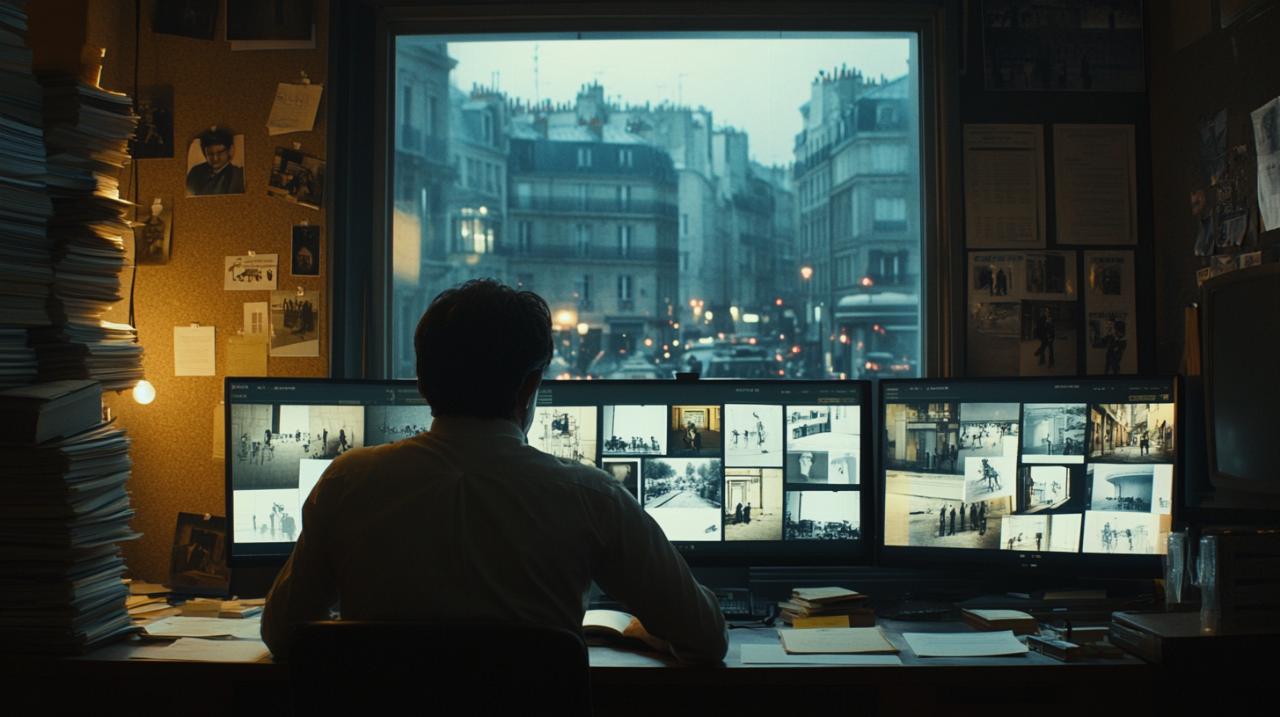
When you think about surveillance, you probably imagine shadowy figures tailing someone down a dimly lit street, or perhaps the police monitoring suspects from unmarked cars. In France, the reality of how investigations work is rather more nuanced, particularly when you compare what the Old Bill can get up to versus what a private detective is allowed to do. The rules, the resources, and the reach differ significantly between the two, and understanding these distinctions is crucial whether you're considering hiring a private investigator or simply curious about how the system operates. The landscape of investigation services in France is tightly controlled by legal regulation, ensuring that both police and private eyes operate within clear boundaries, though those boundaries are far from identical.
What powers do french coppers have when they're tailing someone?
Legal Permissions: What the Rozzers Are Allowed to Do Under French Law
The police in France have significant powers when it comes to surveillance and investigations, far exceeding what a private detective agency could ever dream of. These powers are enshrined in various legal frameworks, allowing the authorities to monitor suspects, intercept communications, and even enter private premises under certain conditions. The rozzers can deploy a range of surveillance techniques, from physical tailing to sophisticated electronic monitoring, all under the umbrella of criminal investigations. They operate with the backing of the state, which means they can access databases, request information from third parties, and compel individuals to cooperate in ways that a private eye simply cannot. The legal framework governing police activity is designed to balance the need for effective law enforcement with the protection of individual rights, though the scales often tip in favour of the authorities when serious crime is involved. This means that when the police are investigating a matter, they have the authority to act decisively, particularly in cases involving threats to public safety or national security. Their remit covers criminal investigations, which is a key distinction from the civil and commercial matters that private investigators typically handle.
Surveillance Tech and Methods: How the Filth Keep Tabs on Suspects
The technological arsenal available to the police is another area where they vastly outstrip private detectives. The filth have access to advanced surveillance equipment, from high-definition cameras and listening devices to sophisticated tracking systems and data analytics tools. They can monitor mobile phone communications, track vehicle movements, and analyse digital footprints in ways that would be entirely off-limits to a private investigator. This technological edge is supported by substantial financial resources and legal permissions that allow them to deploy these tools in the pursuit of justice. Physical surveillance is also a staple of police work, with trained officers conducting observation and tailing operations as part of broader investigations. The methods used by the police are often coordinated and multifaceted, involving teams of officers working together to build a comprehensive picture of a suspect's activities. This level of coordination and resource deployment is simply not feasible for a private detective, who typically works alone or with a small team and must rely on more modest equipment and techniques. The police also have the advantage of being able to operate covertly without the same level of scrutiny that a private investigator faces, though they are still bound by legal and ethical standards designed to prevent abuse of power.
What Can a Private Investigator Legally Get Away With in France?
The Boundaries: What a Private Eye Can and Cannot Do When Watching Someone
Private investigators in France operate within a much more restrictive legal framework than the police, and understanding these limitations is essential for anyone considering hiring one. A licensed private investigator, accredited by the CNAPS, is permitted to conduct surveillance and gather evidence, but only within the confines of civil and commercial investigations. They cannot, for instance, carry weapons, reveal their identity or the purpose of their mission during an investigation, or engage in activities that would constitute harassment or invasion of privacy. The Internal Security Code sets out clear rules governing the profession, and practicing without proper authorisation can result in criminal penalties. A private detective must hold a business licence, a management licence, and a professional card, each identified by specific CNAPS-issued numbers such as the authorisation number, the manager's approval number, and the professional card number. These credentials can be verified through the CNAPS website, and clients are strongly advised to check them before engaging an investigator. The scope of work for a private eye includes gathering evidence for legal proceedings, conducting surveillance, searching for missing persons, and assisting in cases involving marital affairs, family disputes, child custody, and corporate investigations such as unfair competition or theft. However, they cannot replace the police or gendarmerie in criminal matters, and their work is focused on providing clients with information and evidence to defend their interests in civil or commercial contexts.

Playing by the Rules: Staying on the Right Side of French Privacy Laws
Privacy compliance is a cornerstone of the private investigation profession in France, and detectives must navigate a complex web of regulations to ensure their work is both legal and ethical. The profession requires adherence to a code of ethics established in two thousand and twelve, which mandates confidentiality, professional secrecy, and respect for individual privacy rights. A private investigator cannot use intrusive methods such as wiretapping or hacking, and they must ensure that any photographic evidence or witness statements they gather are obtained legally and ethically. The requirement for professional training and a clean criminal record is designed to ensure that only qualified and trustworthy individuals can practice as private detectives. Insurance is also mandatory, providing a safeguard against potential mistakes or legal challenges arising from an investigation. The CNAPS, or Conseil National des Activit\u00e9s Priv\u00e9es de S\u00e9curit\u00e9, plays a crucial role in overseeing the profession, issuing licences, and enforcing compliance with the law. This regulatory body can impose sanctions on detectives who breach the rules, ensuring that the profession maintains high standards of conduct. For clients, this means that any evidence gathered by a properly licensed private investigator is more likely to be admissible in court, provided the reports are detailed, objective, and chronological, and that the investigation was conducted in accordance with legal principles. The obligation of means, rather than an obligation to achieve specific results, underscores the fact that private detectives do their utmost to gather evidence but cannot guarantee a particular outcome, a distinction that clients should bear in mind when engaging their services.
How Do the Police and Private Detectives Stack Up Against Each Other?
Resources and Reach: Why the Police Have More Clout Than Your Average Gumshoe
The disparity in resources and reach between the police and private detectives is stark and reflects the fundamental difference in their roles and legal standing. The police, backed by the state, have access to vast databases, forensic laboratories, and specialist units that can be deployed in complex investigations. They can request information from banks, telecommunications providers, and other institutions, and they have the authority to compel cooperation from witnesses and suspects. This institutional clout is simply unavailable to a private detective, who must rely on their own skills, experience, and a more limited set of tools to conduct their work. Financial resources also play a significant role; police investigations are funded by public money, allowing for extensive operations that can run for months or even years, whereas a private investigator operates on a commercial basis, with fees typically ranging from seventy to one hundred and twenty-five euros per hour, and investigations starting at around five hundred euros excluding taxes. The complexity of the case, the type of equipment needed, and the location all influence the final cost, with additional expenses such as accommodation, meals, and mileage billed separately. While clients may be able to recover these costs if a judge deems them justified, the upfront expense can be a limiting factor. Despite these constraints, private detectives offer a level of personalised service and discretion that can be invaluable in civil and commercial matters, where the police may not have the jurisdiction or the resources to become involved.
Real-World Cases: When Hiring a Private Investigator Makes More Sense Than Ringing the Old Bill
There are numerous situations where hiring a private investigator is not only more practical than involving the police, but also the only viable option. Cases involving marital affairs, for instance, are outside the scope of police work, yet they are a common reason for engaging a private detective. A professional investigator can conduct discreet surveillance, gather photographic evidence, and provide court-admissible reports that can be crucial in divorce proceedings or custody disputes. Similarly, corporate investigations into employee monitoring, counterfeiting, or unfair competition are areas where a private eye can add significant value, particularly when a company needs to protect its interests without the publicity or formality of a police investigation. Missing persons cases, inheritance disputes, and unpaid child support are other examples where a private investigator can be more effective than the authorities, especially if the police are unable or unwilling to prioritise the matter. The flexibility and focus of a private detective mean they can tailor their approach to the specific needs of the client, providing regular updates and working closely with legal advisors to ensure that the evidence gathered will stand up in court. In France, with nearly eight hundred licensed private detectives operating in two thousand and twenty-five, the profession has become an established part of the legal and commercial landscape, offering services that complement rather than compete with the work of the police. Whether it is tracing a debtor, investigating sick leave abuse, or uncovering fraud, a private investigator brings a unique set of skills and a commitment to professional ethics and confidentiality that can make all the difference in resolving complex and sensitive matters.